Five-Minute Study Routines that Beat Five-Hour Cramming
12th November 2025 by Naima Khan
Five-Minute Study Routines that Beat Five-Hour Cramming
In the world of exams, there seems to be a general belief that studying longer will yield better results. Recent scientific research in cognitive science shows that simply studying in short intervals is much more effective than sitting down for even long cramming sessions. It doesn't matter whether you're studying for your GCSE, A Level math, or whether you're revising for science or your English exam - learning to master the craft of micro-study routines can have a serious impact on your learning and exam performance, without burning out.
This article will share how a five-minute study routine can produce better results over hours of cramming, why this works according to science, and how both tutors and students can build study plans based on this method of studying.
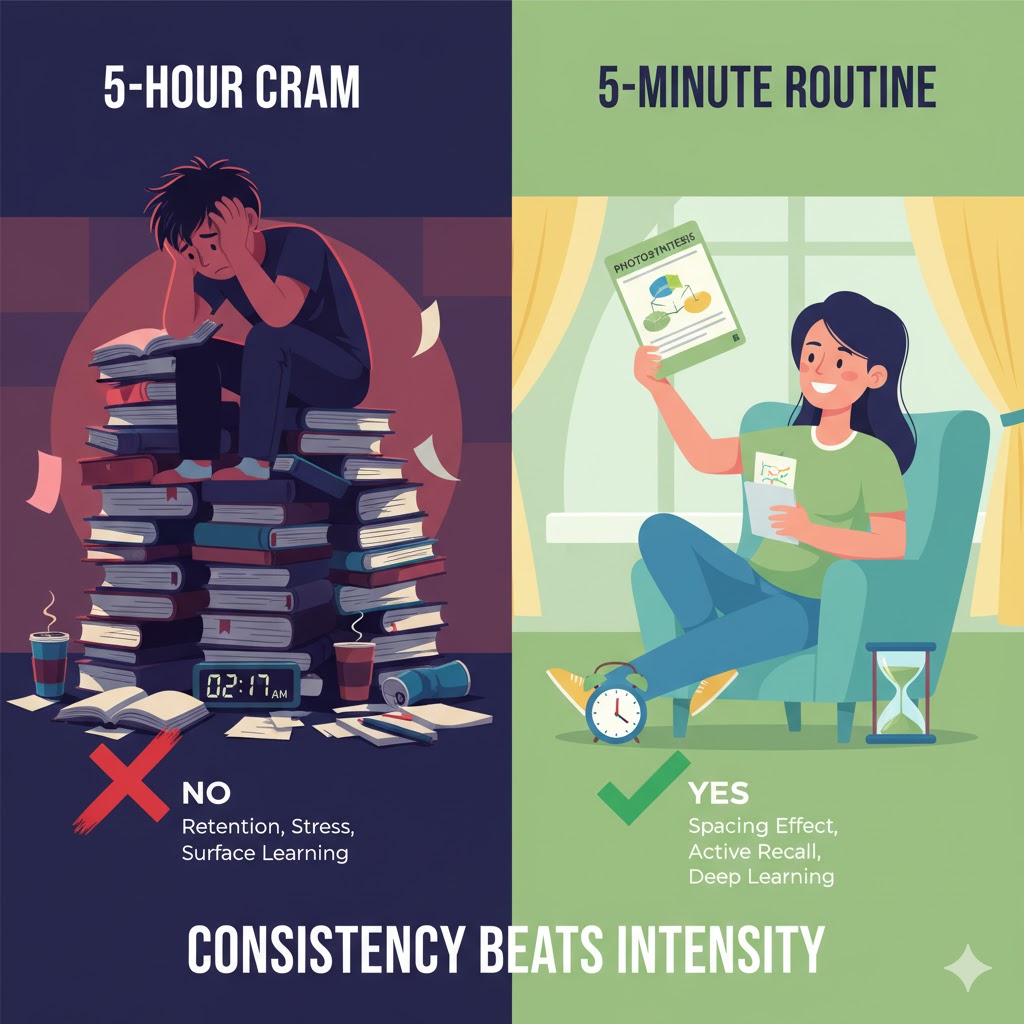
Why 5-Minute Study Routines Are More Effective than 5-Hour Cram Sessions
The Cognitive Science Society's (CSS) report, released in 2023, suggests that the human brain retains learning more effectively when spaced out over multiple opportunities and broken into smaller chunks than when it is experiencing massed learning (cramming). In other words, tapping into those shorter study sessions lets the brain rest, recall, and then store information quickly and efficiently.When students cram, they are filling their working memory to the brim. According to research from the University of California, San Diego, sustained attention drops precipitously after about 45 minutes of sustained attention, while micro-sessions varying from 5–10 minutes will keep the brain engaged and alert.
This is why many highly trained tutors and GCSE educators in England are increasingly advocating for 5-minute review sessions on a daily basis rather than exhausting hours of reviewing study materials. It is also consistent with the fact that students learn in less time than in more time, by applying active recall when studying, or spaced intervals when reviewing, to revise GCSE subjects.
The Science Behind Short Study Bursts
Short bursts of studying promote what neuroscientists call the "spacing effect", a phenomenon identified by psychologist Hermann Ebbinghaus. Ebbinghaus found that information learned at spaced intervals was remembered 80% longer than information learned in one contiguous session.
For GCSEs and A-Level students, this means that if they reviewed just one mini-topic - like a maths formula, English poem, or a science concept - every few hours or days, they would be able to build neural connections better.
Educators from all parts of the UK are starting to adopt this principle more. As stated in The Sutton Trust’s (2023) report on effective learning, schools with mini-lessons demonstrated a 20% increase in retention rates compared to long revision sessions, when students were offered shorter guidance posts.
How Students Can Create 5-Minute Study Habits
The basis of effective short study plans is consistency.You do not need to spend hours of studying; you need consistency. This is how learners can implement micro-study routines into their everyday lives, despite the demands of school and extra-curricular activities.
-
Focus on a Single Concept or Idea at a Time
Instead of altering several chapters, each five-minute study session should focus on one single subject; for maths revision GCSE, a strong equation, or for English literature, a paragraph from a text. This serviceable focus on one subject area will also prevent your mind from tiring quickly and will help you understand.
- Active Recall and Mini Tests
A research article based in the British Journal of Educational Psychology, released in 2022, indicated that learners who actively quizzed themselves followed by a short study time, performed twenty percent better than in the re-reading passive revision condition. Most quizzes can be produced in a short amount of time, with flash cards or other short quizzes from trusted GCSE revision websites.
-
Utilize Spaced Repetition
Review the same concept several times over the following days. There are apps that do this type of study (Anki or Quizlet for instance), but you can certainly do this type of study without an app. The key idea here is this — you can study photosynthesis for five minutes today, and then revisit it in about two days for a review of another five minutes — every time you do this, you will remember the information even stronger until the next review.
-
Connect One Study Practice With Something You Already Do
Attach your five-minute study habit to something you already do every day. For example, you could review a flashcard set while waiting for dinner to finish cooking, or review a topic on the train to work. Pairing study with already customary moments in your day will help you easily maintain a regular habit of study.
What Tutors Say: The Power of Micro-Learning
Private tutors across the UK have begun adopting micro-learning methods as part of their teaching strategies. As one London-based science tutor explains:
“My GCSE science students used to cram for hours before exams and feel overwhelmed. Now, with short revision bursts and interactive recall techniques, their retention has improved dramatically — and they feel more confident.”
In the online Math & Science Tutor or other directory, tutors may suggest micro-learning sessions for students who have difficulty with time management. These exercises might include practicing just one equation, thinking out loud about one concept, or reviewing just one diagram. This type of learning helps establish a constant and consistent feeling of progress,
Likewise, regarding GCSE English tips, tutors always suggest short writing or analysis drils every day.Spending just five minutes interpreting a poem or identifying a literary device trains analytical thinking far better than last-minute essay memorisation.
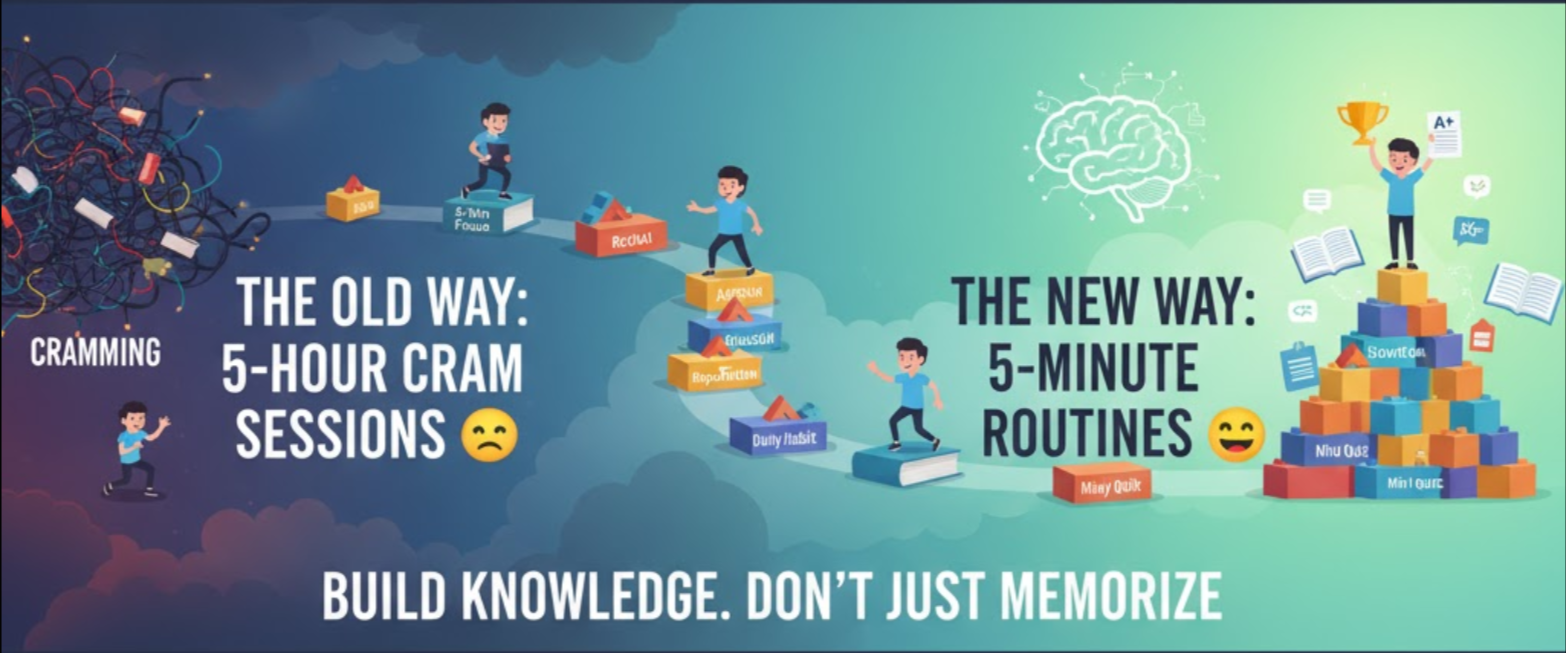
5-Minute Revision Methods That Work
The “1-1-1” Technique
One concept, one question, one minute of recall.
In a five-minute maths session, for example, you can recap a key concept, like Pythagoras’ theorem, create a question based on that concept and then spend one minute explaining the answer to the question in any format. The idea is to build understanding and rationale, both of which are key for A Level maths revision.
Pomodoro-Based Micro Sessions
The Pomodoro method for studying is a well-known, 25-minute block; however, GCSE students can take this idea and make it much shorter! You will want to set a timer for five minutes. You will study hard for five minutes, thinking about the understanding, meaning, and importance of the content. You will take a two-minute break after your five minutes of studying (you could simply take a break or move onto the next task, or the word of the day...). You can complete this repetition over the day and the week by remembering that you are learning more effectively, but without burning out.
Summary of Daily Topics
Spend five minutes before going to bed summarising what you studied today. A 2024 study from King’s College London has shown that students can increase their memory consolidation by up to 30% by summarising lessons just before sleep. Part of this is that while we sleep, the brain is reorganising the information we learn.
The Role of Technology in Short Study Routines
Digital tools have streamlined the ability to integrate short study periods into daily life. Good GCSE revision websites now include 'bite-sized' quizzes, fast topic overviews, and flashcards designed for new exam specifications. For example, sites such as BBC Bitesize and MathsMadeEasy provide mini-quizzes and five-minute learning challenges, which are ideal for your student to use as a daily revision opportunity.
Tutors are also using digital resources as part of the lesson flow, allowing students to monitor their progress and adjust their study regimen based on usage performance. Short and data-driven studying periods also allow students to identify weaknesses quickly, which is something that a five-hour last-minute cramming session does not do well.
Why Cramming Is Fading Out
Not only does cramming result in poor retention, but it can also create cognitive fatigue and stress. The Department for Education (DfE) reported in its academic performance review for 2023 that students who revised over a period of weeks scored an average of 12% higher than students who only revised the days before the exam.
Long cramming sessions also promote surface learning (doing a lot of memorising without much understanding). Cramming sessions lead to deep learning because shorter bursts of study enable students to create links between ideas and concepts in one subject and within another. This deep understanding is particularly important in areas such as science and maths, where one topic builds on and connects to another.
How Tutors Can Encourage 5-Minute Routines
Tutors play an important role in helping students adopt smarter study habits. By incorporating micro-tasks into homework plans and encouraging short, daily check-ins, they can cultivate stronger independent learners.
For example, a tutor might assign:
- A five-minute recap video review after each session.
- One-question daily challenges via email or text.
- Short reflection tasks (“Explain today’s concept in one sentence”).
These little habits build discipline and confidence — both crucial attributes for success during your GCSEs and A-Levels.
Conclusion: Step-by-Step the Big Picture
When you think of succeeding in GCSEs and A-Levels, success isn't determined by the amount of study time you put in, but more by how you utilize that study time and your effectiveness in study. 5 minutes of study sounds trivial, but when it's quality study time, 5 minutes has the ability to transform your approach to learning. With just a few minutes a few days a week, students can make steady exam preparation into a long-lasting habit that provides far more impact than cramming.
Even if your students are studying with tutors or pre-approved sites for revision, if they pair techniques for effective revision of the GCSE with little bursts of concentrated study every day, all while making the experience of preparing for the exam, they will find they can have long-term mastery of the task at hand.
In education, consistency always beats intensity — and five minutes, used well, can be worth far more than five hours of stress-filled cramming.